From: Shenzhen Daily | Updated:2026-11-16
At Yantian International Container Terminals — the world's largest single container terminal — around 100 shipping routes connect Shenzhen with destinations around the world every week, 53 of them serving APEC member economies.
About an hour's drive from Yantian Port, Narwal, a tech firm based in Shenzhen's Robotics Valley, is reshaping the landscape of the global cleaning sector.
In 2025, the company ranked among the top five in the global household cleaning robot market, with products reaching more than 30 countries and regions. Narwal's robot vacuums ship out of Yantian Port and make their way into the living rooms and kitchens of 6 million households worldwide.
From January to April this year, Narwal's total overseas revenue grew nearly 50% year on year, and the share of overseas revenue rose to about 40%.
From nobody to top 5

Narwal's founder and CEO Zhang Junbin.
On Oct. 28, Narwal celebrated its 10th birthday. In 2015, Zhang Junbin, who had just graduated with a master's degree from Shanghai Jiao Tong University, submitted his resume to Li Zexiang, a professor at the Hong Kong University of Science and Technology known as the "godfather of hard-tech entrepreneurship."
During a meal with Li, Zhang shared his ambition of building a world-class product.
Li then took Zhang and several other ambitious young people to meet R&D personnel and senior product managers at major tech companies in Silicon Valley, broadening their horizons and encouraging them to think big.
A year later, Zhang founded Narwal at the Songshan Lake robotics base in Dongguan.
At the time, most robot vacuums focused on sweeping, not mopping.
Zhang wanted to make a vacuum that could mop the floor on its own without human intervention. His team experimented with 20 different mop shapes and conducted more than 200 tests.
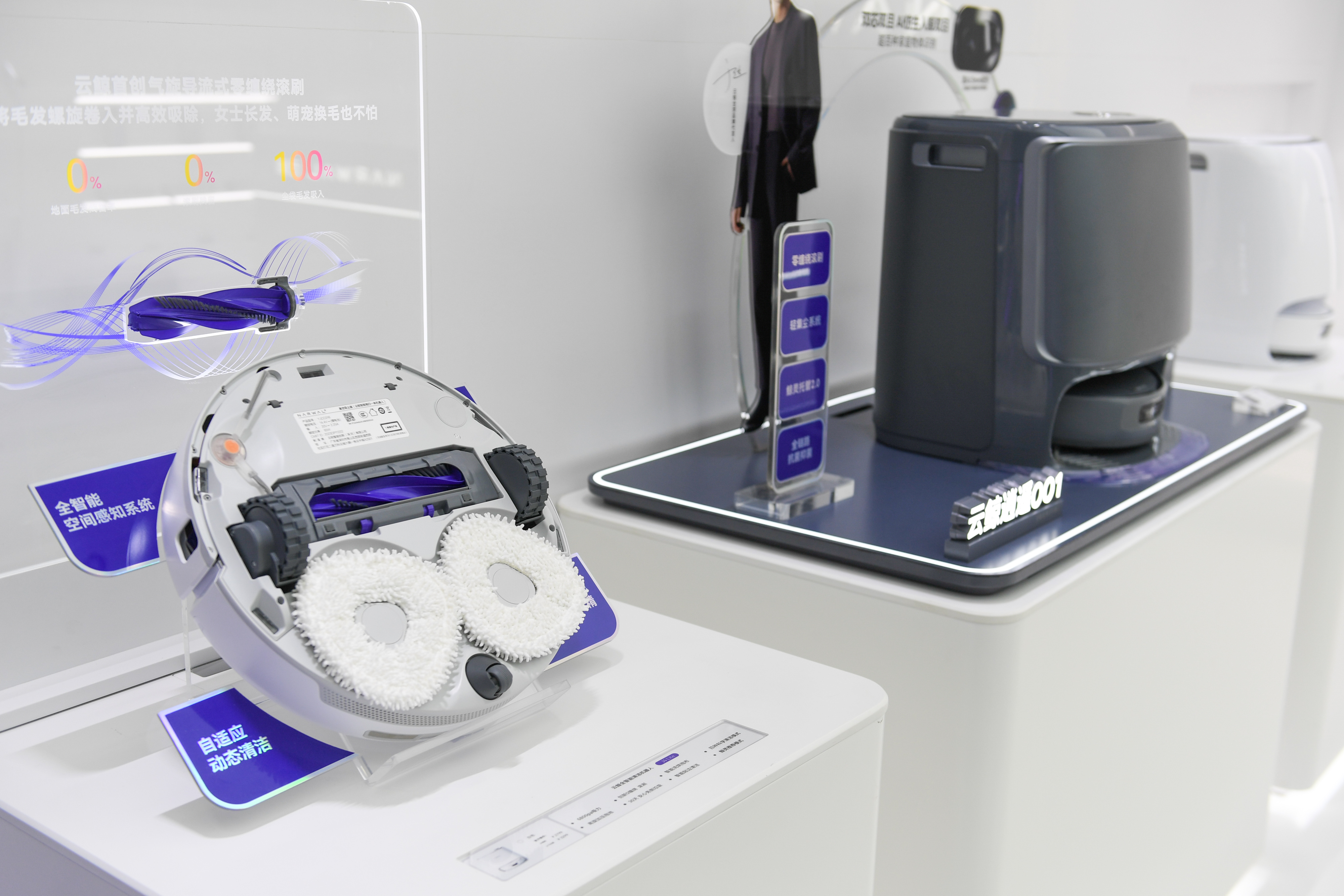
Narwal's robot vacuums on display.
In 2019, Narwal launched the J1, its first product after three years of research and development. It was the world's first all-in-one sweeping and mopping robot equipped with a self-cleaning mop function. Within one year of launch, sales reached 200,000 units, revenue rose to 800 million yuan, and the J1 was named one of Time magazine's Best Inventions of 2020.
A report released by IDC in March this year showed that in 2025, Chinese brands — Roborock, Ecovacs, Dreame, Xiaomi and Narwal — made the top five in global household cleaning robot shipments, together accounting for about 54.5% of the market share.
IDC also noted that Narwal ranked third in China's domestic market in the first three quarters of 2025, with a 16.2% market share, reflecting the strength of its products and its expanding user base.
Going global
Narwal relocated to Shenzhen in 2020 and began expanding overseas two years later.
In 2024, Narwal's overseas revenue soared sevenfold year on year, and its products sold to more than 30 countries and regions. Since 2024, Narwal's overseas shipments have successively passed the 3 million, 5 million and 6 million marks.

An exhibition hall at the headquarters of Narwal.
Looking back on the past 10 years, Zhang said his most difficult decision was to resist the temptation to grow too fast. As competitors expanded their categories, Narwal chose to focus on and refine its existing products. "This decision was counterintuitive. While everyone else is running, you are staying behind and polishing details," he said.
"Our users have come to believe that the Narwal brand stands for good quality," Zhang added. Narwal was rated China's most satisfactory robot vacuum brand in 2025, according to an online survey by AVC, a home appliance data analyst.
Bin Ye, Narwal's global marketing head, said the company's success stems from its ability to address customers' pain points in different markets.
Positioning itself as an AI cleaning expert, Narwal chose to focus on markets where robot vacuums already enjoy relatively high penetration rates. The company has tailored its products to local household habits and needs: American households prefer carpets and often keep pets; Southeast Asian residents often walk barefoot on hard floors; and some consumers have low tolerance for machine noise.
In northern Germany, where the water is hard, limescale tends to accumulate in the water tanks and pipes of robot vacuums. Narwal's team quickly optimized its products to address the problem.
They also found that overseas users use cleaning solutions much more frequently than their Chinese counterparts, prompting Narwal to launch products with automatic detergent dispensing.
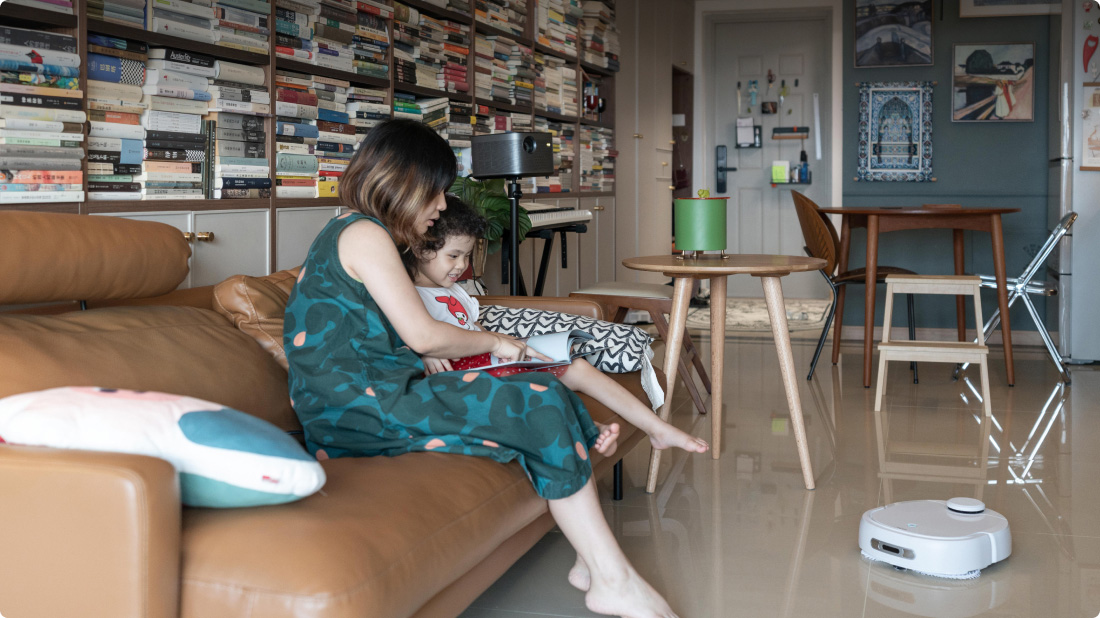
Narwal's overseas shipments have successively passed the 3 million, 5 million and 6 million marks.
For the convenience of pet owners, Narwal's J4, launched in 2023, introduced a cyclonic, guided anti-tangle roller brush. Using strong suction and high-speed rotation, the brush directs long human and pet hair toward a conical collection area before sucking it into the dust bag.
Southeast Asia has a hot climate, and residents often go barefoot indoors. Like Chinese users, they prefer tiles and hard floors. Narwal's robot vacuums that can wash their mop cloth and have strong cleaning power are very popular.
For those who favor quietly operating robot vacuums, Narwal has redesigned its fan duct structure to reduce operating noise.
Homes in American suburbs are generally 200 to 300 square meters, with living rooms connected to kitchens and courtyards. To meet the needs of these larger spaces, Narwal has launched products with long battery life, equipped with a FlowWash system. The design sprays heated clean water onto a wide, moving track-style mop while mopping, scrapes away dirt and immediately draws the dirty water back into a separate waste tank.
The flagship Flow2 (domestically named Xiaoyao 003), first unveiled at CES in the United States in January 2026, has become a best-seller. Within 24 hours of its launching on Amazon in North America, sales of Narwal robot vacuums surged 305% year on year.
For users in smaller urban apartments in the United States, Narwal launched a compact vacuum cleaner. About 40% smaller than traditional models, it automatically empties collected dust into its base station. With various interchangeable attachments, it can clean sofas and curtains too.
From "cost-effective" to "price for quality"
"Ten years ago, overseas clients defined Chinese products as affordable. Today, Narwal's best-selling models overseas are priced at more than $1,000. Consumers are willing to pay the price for quality," Bin explained.
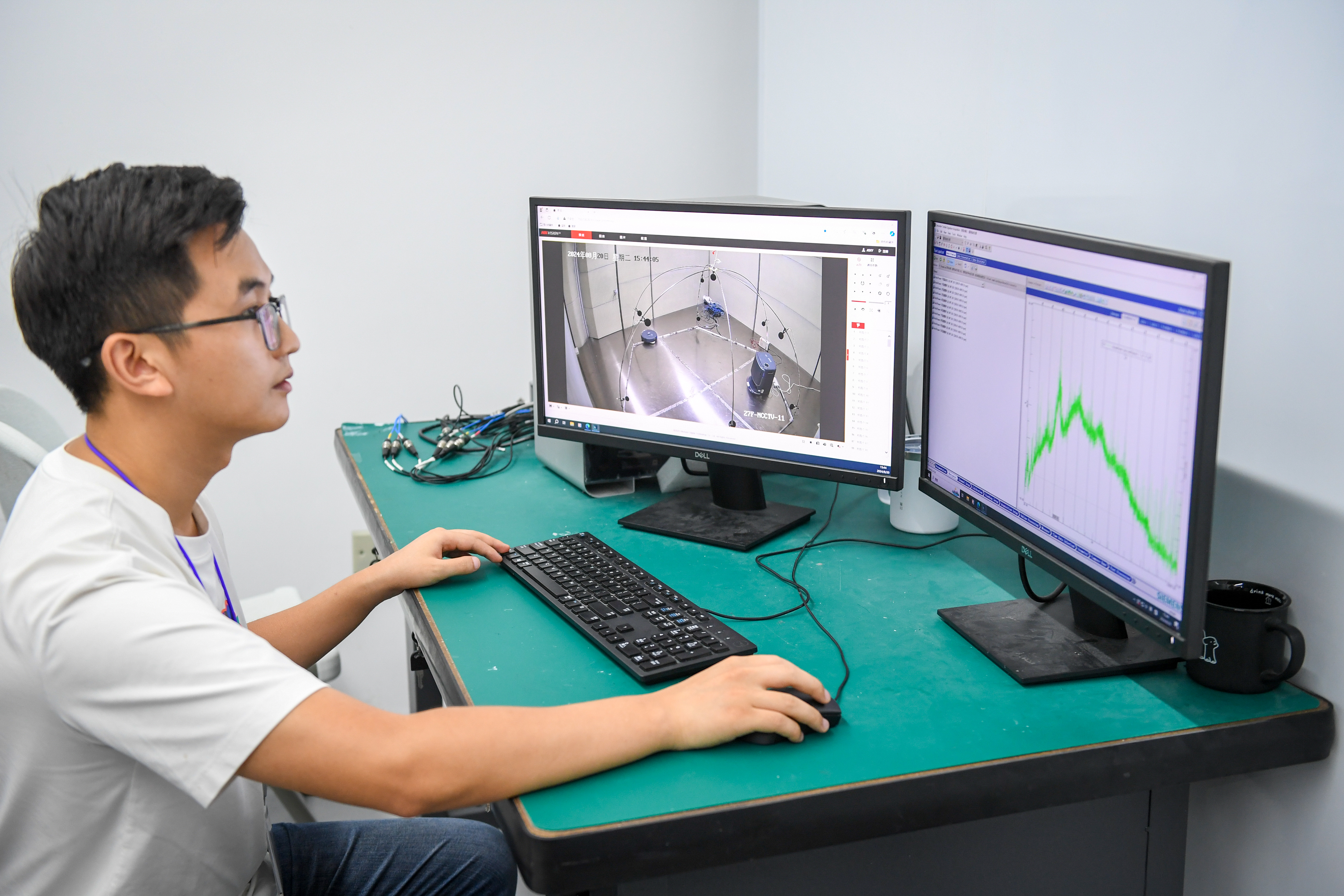
An engineer tests the noise of a Narwal robot vacuum.
A focus on cost-effectiveness can sometimes mean accepting compromises in quality in exchange for a lower price. This mindset often fuels price wars.
In contrast, value for money is about whether a product delivers quality and performance commensurate with its price. Today's overseas users are willing to spend more as long as they believe the product's quality matches the price, she said.
"In European markets such as Germany, users place great importance on value for money and pay close attention to whether higher-priced products offer functions and services that justify the premium."
The mention of Shenzhen has also helped the Narwal team win over new customers abroad.
"Overseas industry insiders know that Shenzhen, a hub for smart gadgets, has a complete supply chain and a mature hardware manufacturing ecosystem," she said.
Narwal began moving to Shenzhen at the end of 2020 because of a steady supply of tech talent and policy and other support available at the Robotics Valley.
In the year it settled here, Narwal expanded from 200 to 1,000 staff. Today, Narwal has nearly 2,000 employees, with an average age of about 30, and R&D personnel accounting for about 40%.
As a "super hub" for cross-border e-commerce, Shenzhen is home to half of China's cross-border sellers and supporting service providers, providing companies such as Narwal with a strong ecosystem to support their global expansion.


 Fish lantern dance lights up Moon Festival night
 Grand parade rocks Zhongying Street at Tin Hau Festival
 Dragon Boat Festival fair revives old traditions
 Overview