From: Shenzhen Daily | Updated:2026-11-20
As world leaders gathered in Shenzhen for the 33rd Asia-Pacific Economic Cooperation (APEC) Economic Leaders' Meeting on Nov. 18–19, some also found time away from formal diplomacy to promote produce from their home countries and engage with local life.
On the morning of Nov. 18, Chilean President José Antonio Kast visited a Pagoda fruit store for an event marking the arrival of the 2026–2027 Chilean cherry season in China.
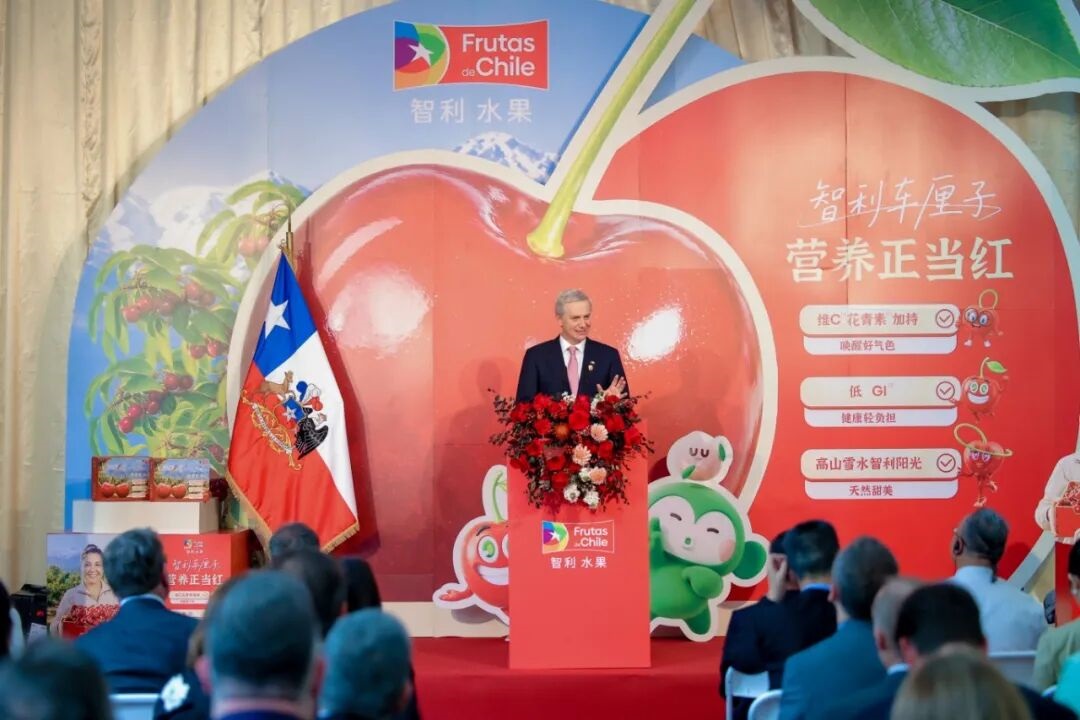
Chilean President José Antonio Kast speaks during his visit to a Pagoda fruit store in Shenzhen. File photos
Organized by Chilean company Frutas de Chile and export promotion agency ProChile, the event highlighted the significance of the Chinese market to Chile's fruit industry.
In a symbolic ceremony, Kast presented a box of Chilean cherries to a local Chinese family, celebrating the start of a new cherry season.
The president described cherries as an important symbol of trade and friendship between Chile and China and invited Chinese consumers to enjoy the fruit with family and friends.
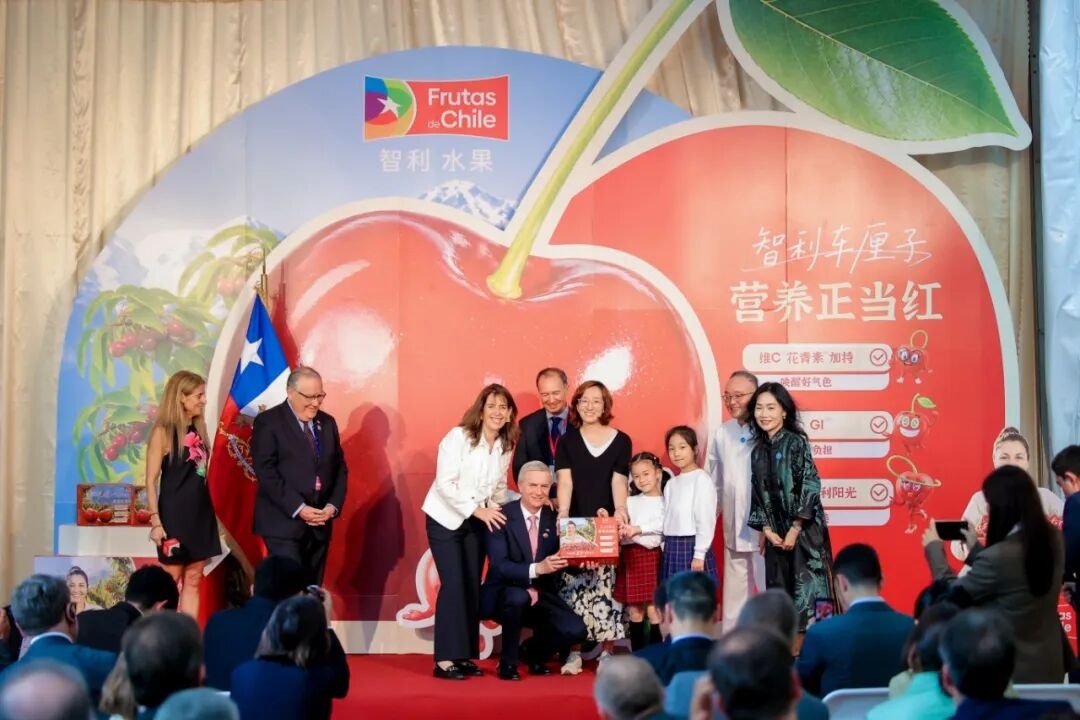
Chilean President José Antonio Kast (4th L, front row) poses with Frutas de Chile and ProChile officials as well as a Chinese family after presenting a box of Chilean cherries to the family during a ceremony at a Pagoda store.
China is the biggest market for Chile's cherry exports, accounting for more than 90% of the total. The fruit has become a prized feature of Chinese supermarkets during the winter season. Pagoda, the fruit retailer that brings fresh fruit from the Southern Hemisphere to thousands of households, is based in Yantian.
As early as 2012, Pagoda began procuring fruit from Chile, with cherries making up the first imports and remaining the flagship category.
After being freshly harvested from Chilean orchards, the cherries are pre-cooled at 0°C, sorted, and packaged in modified atmosphere within 72 hours, then travel to China via air freight and express sea routes. Upon arrival, they must also pass 298 pesticide-residue tests and two heavy-metal tests. They reach Chinese consumers only after passing many rounds of checks.
Beyond cherries, Pagoda also imports grapes, apples, blueberries, kiwifruit, and other fruits from Chile.
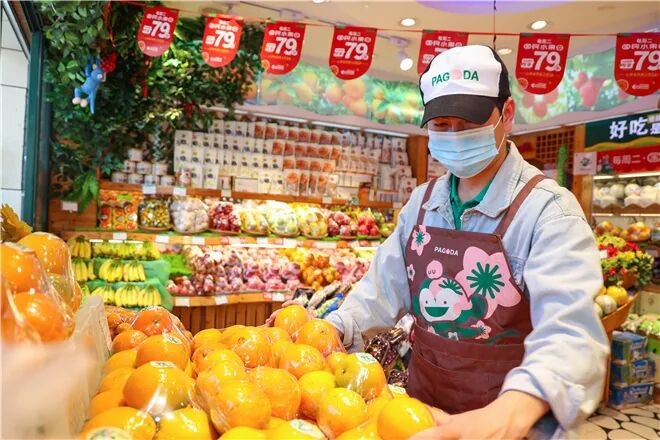
A staffer arranges oranges on a shelf at a Pagoda store.
As of June 30, 2026, Pagoda has 26 national warehouse and distribution centers and a total of 6,709 stores in more than 180 cities across 22 provinces in China. Among these are 4,758 directly managed fruit stores and 1,951 brand-partner stores that sell both fruits and snacks.
As Chile and China are nearly 20,000 kilometers apart, Yantian Port is one of the key links that have made the journey of cherries possible.
As the world's largest single container terminal, Yantian Port operates 100 shipping routes every week connecting the globe, 53 of which directly serve APEC member economies.

A view of Yantian Port.
In the first three quarters of this year, Yantian Port's container throughput exceeded 12 million TEUs, up nearly 10% year on year.
Not only does fresh fruit from the Southern Hemisphere land here, but AI glasses and other high-quality Chinese-made goods from the Greater Bay Area also board ships at Yantian Port and set sail for destinations across the Asia-Pacific.
The busy port is an epitome of the connection between Yantian and the Asia-Pacific.


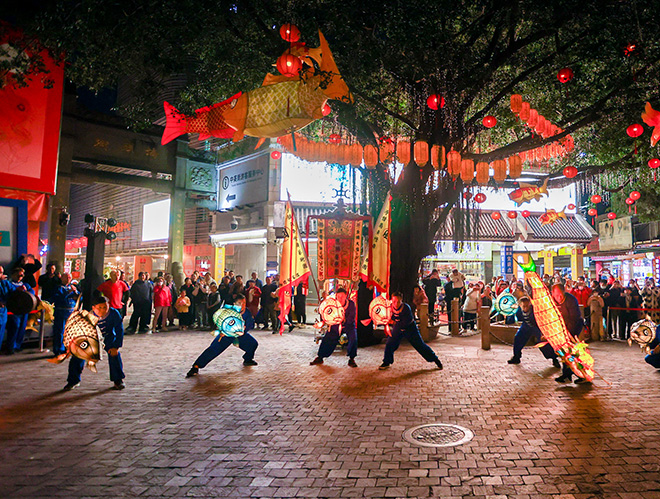 Fish lantern dance lights up Moon Festival night
 Grand parade rocks Zhongying Street at Tin Hau Festival
 Dragon Boat Festival fair revives old traditions
 Overview