Yantian has a long and rich history. Archaeological excavations at the Dameisha bay dune site show that humans lived and thrived here as early as the Neolithic period. Around 4,000 to 5,000 years ago—during the Xia and Shang dynasties in the Central Plains—the area was home to Baiyue tribes.
In 214 B.C., Emperor Qin Shi Huang unified China and set up three prefectures namely, Nanhai, Guilin, and Xiangjun in Lingnan area. At that time, Yantian belonged to Panyu County under Nanhai Prefecture.
In 331, the sixth year during the reign of Emperor Xianhe of Eastern Jin Dynasty, the imperial court abolished Nanhai Prefecture and established Dongguan Prefecture, which had jurisdiction over six counties including Bao’an, Xingning, and Haifeng. Dongguan Prefecture encompassed the current Pearl River Delta, Huizhou, and Chaozhou. At that time, Bao’an County governed the current Dongguan, Shenzhen, and Hong Kong.
The government of Dongguan Prefecture was located in Nantou, within Bao’an County. Parts of present-day Yantian belonged to Bao’an County, while Sanzhoutian (now part of Yantian), along with Pingshan, Henggang, and Longgang, belonged to Huiyang County.
In 590, the tenth year of the reign of Emperor Kaihuang of the Sui Dynasty, the imperial court abolished Dongguan County and Bao’an County was placed under the administration of Nanhai Prefecture, with the county government located in Nantou.
In 757, the second year of the reign of Zhide of the Tang Dynasty, Bao’an County was renamed Dongguan County.
In 1573, the first year of the Wanli reign in the Ming Dynasty, Dongguan County was abolished and Xin’an County (the predecessor of Bao’an County) was established, with its county seat remaining in Nantou.
In 1666, the fifth year of the reign of Emperor Kangxi of the Qing Dynasty, Xin’an was included into Dongguan County. In 1669, the eighth year of the reign of Emperor Kangxi of the Qing Dynasty, Xin’an County was re-established, with three townships and seven administrative units under its jurisdiction; the Yantian area fell within the seventh unit.
In 1914, the third year of the Republic of China, the administration divisions of the country were reorganized. Because the name “Xin’an County” was the same as the Xin’an County in Henan Province, so the former was renamed “Bao’an County.” Between 1924 and 1932, the 13th to the 21st year of the Republic of China, the district and village system was implemented. Within the Yantian area, there were two villages: Shatoujiao and Yantian.
In 1933, the 22nd year of the Republic of China, the two villages were consolidated into one, named Donghe Village, marking the first time the Yantian area was placed under a single unified administrative structure.
In October 1949, Donghe Township was liberated and taken over by Huiyang County. In April 1950, it was returned to Bao’an County and became a township under the jurisdiction of the Second District. In 1951, the area was divided into Shatoujiao Township and Yantian Township. In October 1952, the area was divided into three townships—Shatoujiao, Yantian, and Meisha—under the administration of the Sixth District. In August 1955, the Sixth District was renamed Shatoujiao District.
In October 1958, the “unified government and commune” system was implemented, and the area was temporarily organized as Nantianmen Commune under Shenzhen’s jurisdiction. In November, Longgang, Henggang, Pingshan, Dapeng, and other areas were transferred from Huiyang County to Bao’an County. At this time, Sanzhoutian was separated from Pingshan and incorporated into the Yantian Production and Management Area. Afterwards, the area sometimes had one town and one commune, while at other times they were merged into a single commune.
In March 1979, Bao’an County was reorganized as the city of Shenzhen, and the Yantian area fell under Luohu District. In June 1980, Shatoujiao District was established after being separated from Luohu District. In August, the Shenzhen Special Economic Zone was established, and the Yantian area—except for some mountainous parts such as Sanzhoutian—was incorporated into the Special Economic Zone.
In October 1981, Bao’an County was reinstated, governing the areas of the former Bao’an County outside the Shenzhen Special Economic Zone.
In January 1982, Luohu District was established, covering the entire Special Economic Zone, including the Yantian area. In September 1982, Shatoujiao Township was separated from Luohu District as a county-level town.
In June 1983, Shenzhen Special Economic Zone set up four district offices including Luohu, Shangbu, Nantou and Shatoujiao.
In May 1984, the Shatoujiao District Office was reorganized as the Shatoujiao Management Area, remaining an administrative body under the municipal government.
In January 1990, five management areas within the Special Economic Zone—Luohu, Futian (formerly Shangbu), Nantou, Shekou, and Shatoujiao—were abolished, and three municipal districts—Luohu, Futian, and Nanshan—were established. The Shatoujiao Management Area and Luohu Management Area were merged to form the Luohu District Government.
On October 21, 1997, the State Council approved the separation of Shatoujiao Township and the Meisha and Yantian administrative subdistricts from Luohu District to establish Yantian District, making it one of the six municipal districts of Shenzhen.
On February 16, 1998, the Yantian District Committee of the CPC and the Yantian District Government were established. On March 30 of the same year, the unveiling ceremony of Yantian District was held.
In June 2002, Yantian District abolished Shatoujiao Township and reorganized the area into two subdistricts: Shatoujiao and Haishan.
On December 16, 2014, the Zhongying Street Administration Bureau was established.


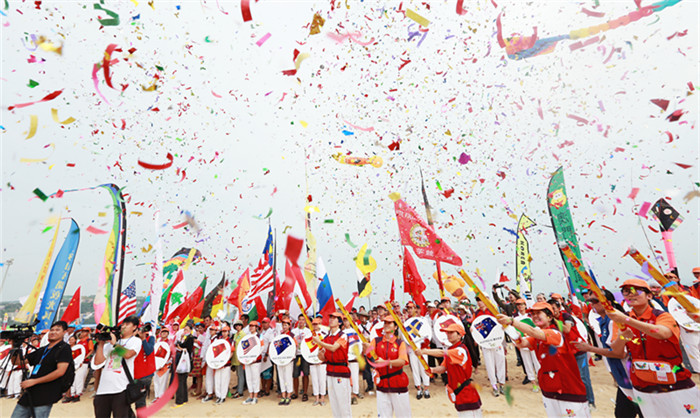 Overview
 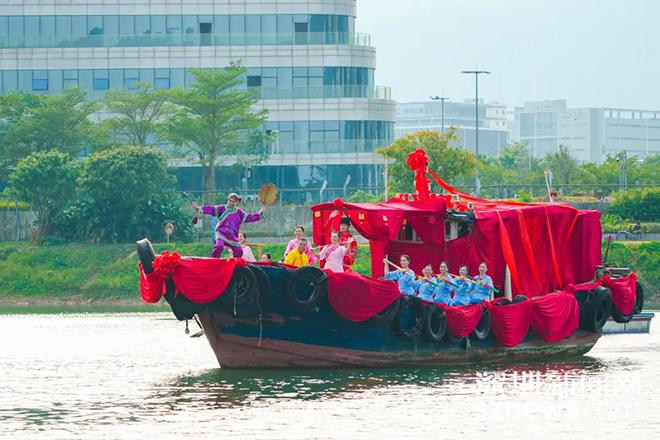 Yantian Tanka Cultural Festival
 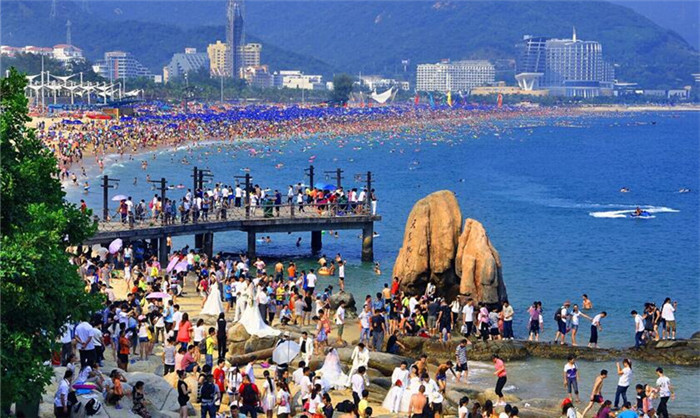 Shenzhen Golden Coast Tourism Festival
 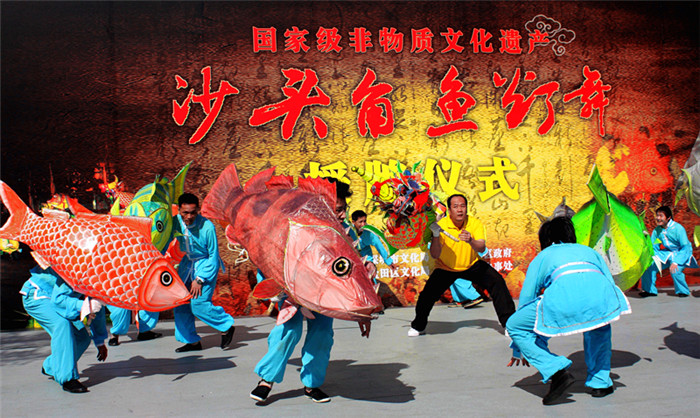 Shenzhen Shatoujiao Fish Lantern Festival


