From: Shenzhen Daily | Updated:2026-05-08
In the precision casting workshop of Batar Group in Yantian, the rhythmic clinking of tools fills the air. Lu Baicheng sits at his workbench, hammer in his right hand and graver in his left. Gradually, vivid patterns emerge on a gold ornament.
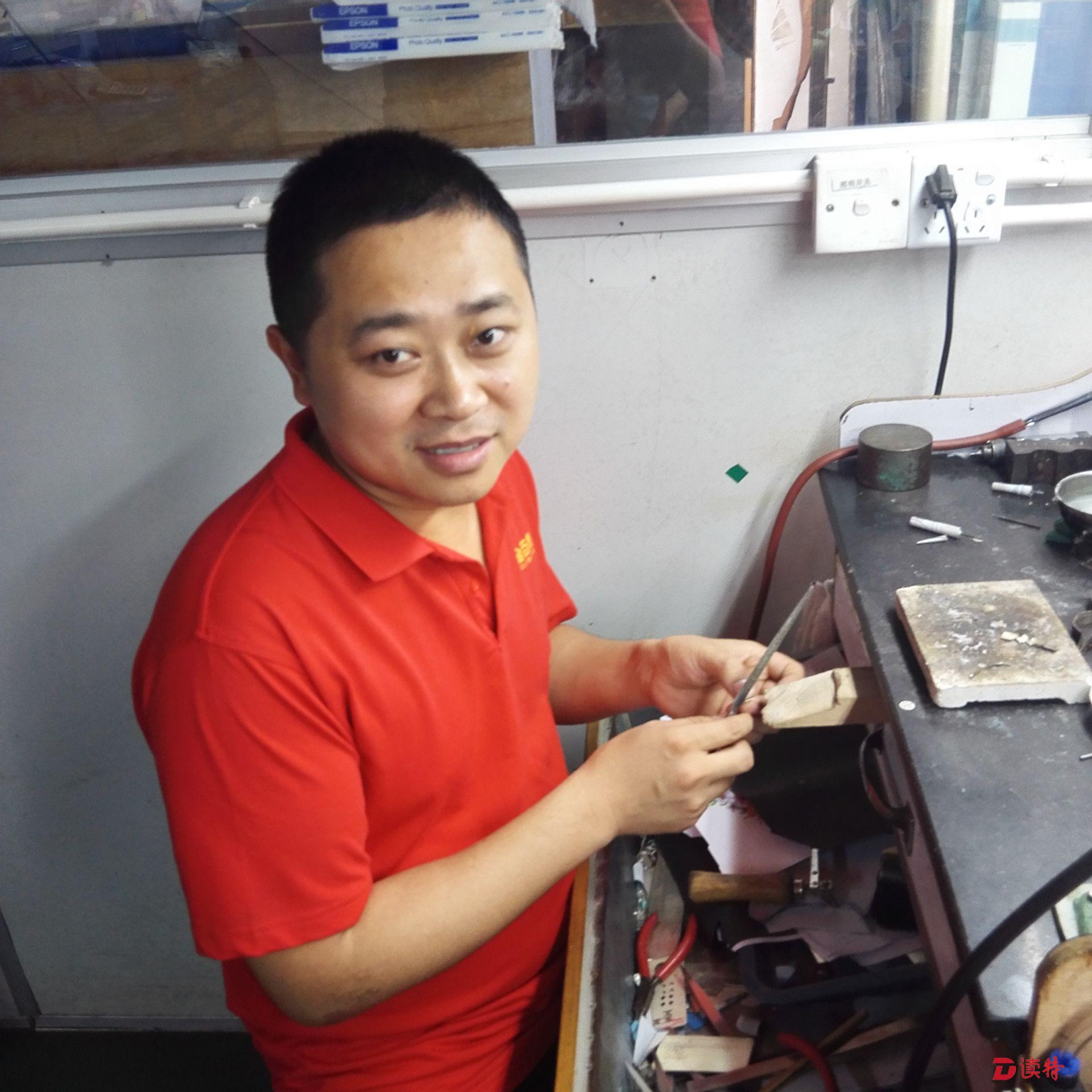
Lu, from Huaiyuan, Anhui Province, first arrived in Shenzhen in 1998 at his cousin's suggestion. Still a teenager at the time, he jumped on a southbound train and found work as an apprentice at a gold jewelry factory in Shatoujiao.
Model making, the first step in crafting gold jewelry, transforms a designer's drawing into a three-dimensional model, which is then used to create the gold piece. This process demands extreme precision and was a formidable challenge for a novice like Lu. He used to make the model for a complex pattern seven or eight times before it would pass inspection.
"To make a flower, knowing where to make it thicker or thinner — it's all about feel. If you mess up, you start over," he explained. Under his master's strict guidance, Lu pushed himself on every detail. For a perfect sample, he would often sit for more than 10 hours at a time, patiently hammering silver thousands of times.
Wire drawing, rolling it into sheets, cutting it into blocks, trimming, shaping, then welding, filing, pressing, and finally polishing — because the process is so complex and demands perfection down to the smallest detail, many young apprentices leave the trade within months of joining. But Lu stayed and has been at it for 28 years.
"All good craftsmanship comes from painstaking effort, bit by bit," Lu said. In 2013, he joined Batar Group and has since received honors including the National Technical Expert title, the National May Day Labor Medal, the title of Shenzhen Technical Model, and the title of Shenzhen Model Worker.
In recent years, technology has reshaped the gold jewelry industry. Computer modeling and 3D printing are gradually entering workshops. Rather than clinging to old techniques, Lu has embraced new technologies, learning 3D modeling from scratch. With his trademark tenacity, he has become a versatile craftsman in his company — proficient in both traditional drawing and digital modeling.
Despite his mastery, he has never stopped improving. In Lu's view, the essence of craftsmanship is no empty slogan. "Stay true to the fundamentals, but also innovate," he believes.
Some say machines will eventually replace human workers, but Lu disagrees: "Machines can capture the 'form,' but not the 'essence.' The experience and wisdom of a craftsman are things robots can never learn."
In his spare time, Lu often visits jewelry stores, spending hours carefully studying other artisans' techniques. As head of research and development, he leads technical breakthroughs, helping improve production efficiency and reduce material waste in the production of gold bracelets. The men's rings he helped design have become bestsellers. The Heavenly Blessing series he co-developed, which blends exquisite craftsmanship with Oriental aesthetics, has been warmly received across domestic and overseas markets.
In 2016, a master studio was established in his name, where Lu passes on his know-how to a younger generation. "A master craftsman is not made in a day — superb skills come from slow, meticulous work," Lu teaches his apprentices.


 Overview
  Yantian Tanka Cultural Festival
  Shenzhen Golden Coast Tourism Festival
 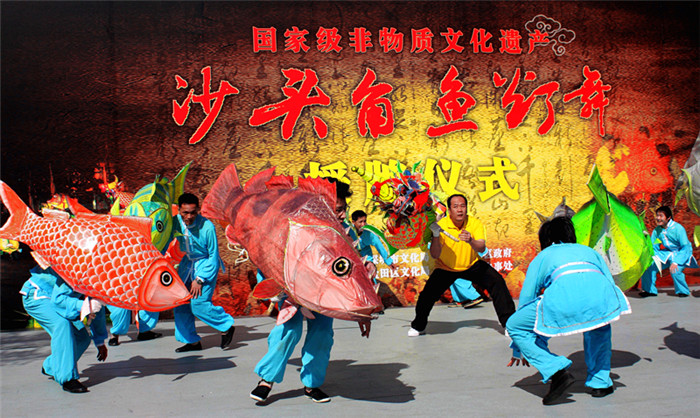 Shenzhen Shatoujiao Fish Lantern Festival