From: Shenzhen Daily | Updated:2026-07-28
As China’s population ages rapidly, the number of elderly people living with age-related conditions is steadily increasing. Among these, Alzheimer’s disease stands out as a major threat to older adults' quality of life, placing a significant emotional and financial burden on families.
Yantian District officially launched an early screening project on July 20, with the goal of enabling "early screening, early detection, and early intervention" for Alzheimer’s disease. Initiated by the district’s civil affairs authorities and supported by BGI and China Merchants Guanyi Home — a local nursing facility — the project seeks to establish a replicable model for Alzheimer’s prevention and control through large-scale community-based screening.
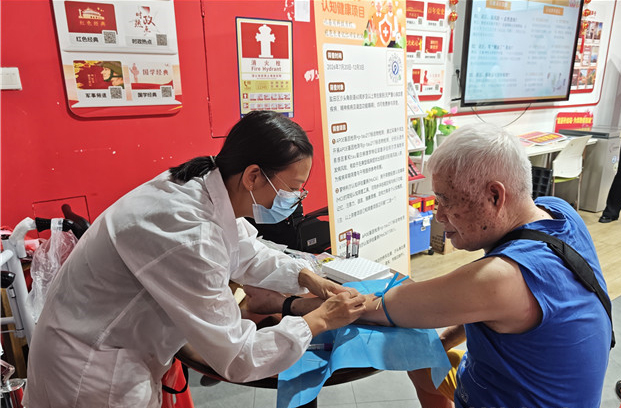
The first screening event took place at the Tianxin Community Service Center, where many elderly residents arrived early and, guided by on-site staff, registered for the program and waited in line for testing. Several participants praised the professionalism and patience of the staff and expressed appreciation for having the services brought to their neighborhood.
The screening program combines APOE genetic testing, p-tau217 biomarker analysis, and questionnaire-based cognitive assessments, offering a critical window for early intervention for people at high risk of cognitive decline.
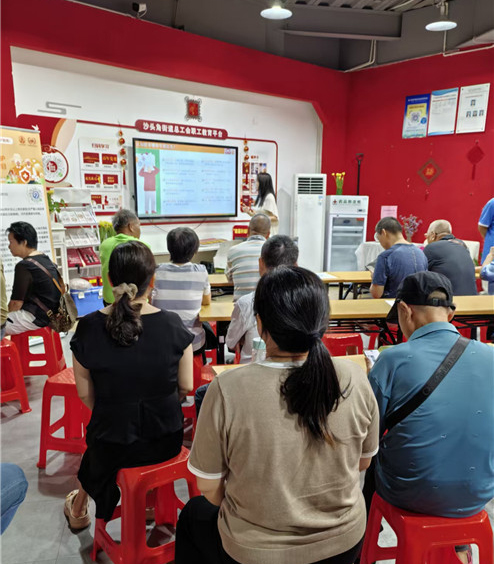
Alzheimer’s disease is a neurodegenerative condition that typically develops in old age or the pre-senile period, marked by progressive cognitive impairment and behavioral changes. It is the most common form of dementia, accounting for roughly 60% to 80% of all cases. Notably, blood-based biomarkers can show abnormalities up to 15 to 20 years before clinical symptoms emerge. With timely detection and early intervention, 10% to 51% of patients with mild cognitive impairment (MCI) may experience significant cognitive improvement or even regain normal cognitive function.
In recent years, the approval of several new Alzheimer’s drugs has brought renewed hope for treatment and has further underscored the importance of early screening. Early identification and prompt intervention can help slow or even prevent the onset and progression of cognitive disorders.
The screening is offered free of charge to permanent residents of the Shatoujiao Subdistrict aged 60 and above. A total of 5,000 APOE genetic tests and p-tau217 biomarker tests, along with 1,100 questionnaire-based assessments, will be provided at no cost.
Eligible residents can bring their ID cards to the nearby Qiaodong Community Health Center or Shatoujiao Community Health Center to participate, starting July 25. Services are available Monday through Friday, from 2 p.m. to 4:30 p.m.


 Overview
  Yantian Tanka Cultural Festival
  Shenzhen Golden Coast Tourism Festival
  Shenzhen Shatoujiao Fish Lantern Festival