From: Shenzhen Daily | Updated:2026-07-31
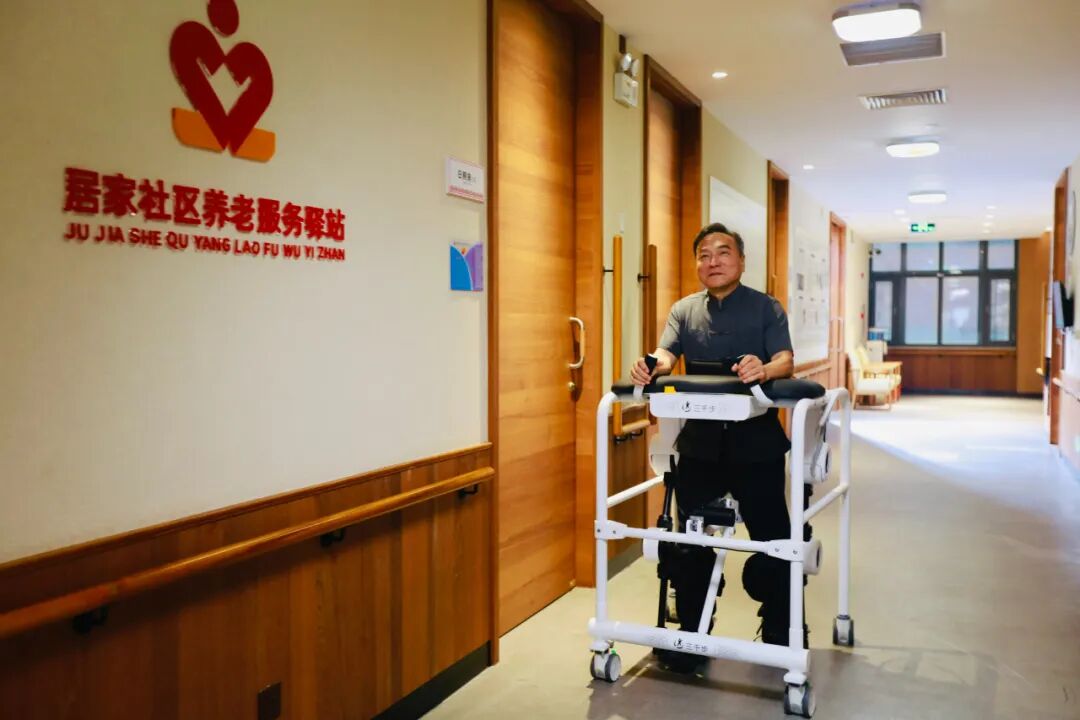
At a special education school in Hong Kong, a child sits in an exoskeleton robot with a small tabletop placed in front of him. On that tabletop, he can place drawing kits or a tablet. In the past, therapists had to repeatedly help him lift his legs and step forward. Now, with the robot’s assistance, the child can draw, play, and complete lower-limb rehabilitation training all at the same time.
In Singapore, another MileBot exoskeleton has been brought into an elderly man’s courtyard. Though physically fragile, he is willing to wear the device every day, slowly shuffling forward step by step.

These are just some of the responses that Shenzhen-based MileBot has received since selling its products overseas: a child embracing rehabilitation sessions, an elderly person enjoying more outdoor time, and a patient breaking into a surprised smile the first time they stand up again.
“When many people stand with the help of an exoskeleton for the first time and realize they can move, they get emotional,” said Chen Kangning, CEO of MileBot and a former doctor.
Founded in 2016, the company started with medical rehabilitation exoskeletons and later expanded into the consumer walking-assist wearable market.
A small tabletop adds usability
At the DBH Life Sciences and Health Industrial Park in Yantian District, an exhibition area at MileBot’s headquarters neatly displays metal structures, joint components, and various types of exoskeletons. These devices are destined for hospitals, rehabilitation centers, nursing homes, special education schools, or the living rooms of ordinary households.

MileBot’s overseas ambitions began in 2023, when a special education school in Hong Kong reached out to the company.
“They were looking for rehabilitation robots to help children with mobility challenges get lower-limb training,” recalled a manager.
Previously, therapists would support the children and guide them through every step, which was both physically demanding and inefficient. Due to staff shortages, some children received only one or two training sessions per week.
With the exoskeleton robots, each child can train for about 30 minutes per session. Therapists are freed from highly repetitive physical labor, allowing them to focus more on the child’s progress.
Later, at the school’s suggestion, a small tabletop was added to the robot so children could draw, play on a tablet, and train simultaneously.
Once exoskeletons enter real rehabilitation settings, their usability is defined by small details: whether the straps are loose or tight, whether the knee pads are at the right height, and whether the frame feels comfortable.
MileBot initially focused on lower-limb rehabilitation. Then, from late 2024 to early 2025, the consumer walking-assist wearable market began to warm up, prompting the company to develop a new line of consumer-grade walking-assist robots.
While rehabilitation equipment for hospitals requires larger frames for therapist operation and gait-data collection, wearable devices for daily use must be lightweight and comfortable, with more advanced algorithms and better design.
Orders from India
In 2024, MileBot focused on promoting large rehabilitation equipment like the A1 model overseas, said Zhou Deqiang, the company’s director of overseas business. While many potential clients showed interest, orders kept stalling.
Then, in May 2025, the company launched the more affordable “3000 Steps” product, aimed primarily at rehabilitation centers in developing countries. An Indian distributor quickly placed an order for two units, as this product filled a long-standing gap in the local rehabilitation market.
Zhou explained that in India, large, expensive rehabilitation robots are mostly imported, and only a few premium hospitals can afford them. A vast number of physiotherapists run small rehabilitation centers themselves. While willing to pay for equipment, these practitioners struggle with prohibitive costs.

For small rehabilitation centers, affordability and usability matter more than impressive spec sheets. Chen put it bluntly: “At a much lower cost, we deliver nearly comparable performance.” The affordable model strikes a balance between cost and performance, making it immediately sought after.
Currently, MileBot’s rehabilitation products are primarily targeted at Asia and Africa, while consumer-grade walking-assist products are more focused on Europe, North America, and South America, where customers value strong technical specifications, regulatory compliance, design, and user experience.
In Southeast Asia, the company has sales channels for both product lines in Singapore, Indonesia, and Malaysia, where locals are willing to try smart hardware and health-tech products.
In India, Zhou had worried about the products’ durability in high temperatures with heavy usage at some private rehab centers. Fortunately, no major issues arose, aside from minor wear on casters. After-sales support was handled through local distributors, with remote guidance from the Shenzhen team.
“Our distributors usually have a certain level of expertise,” Chen said. “These invaluable partners understand local rehab centers and can provide basic after-sales service.”
Even trickier is vetting clients in overseas markets. Whether a client has real distribution channels, service capabilities, and a genuine understanding of end-user needs often requires painstaking verification through video meetings or even site visits.
“The medical business is inherently cautious, and compliance must be solid,” Zhou said. Medical-grade products follow more complex regulatory certifications and payment practices. MileBot is applying for EU CE MDR certification, with plans for U.S. certification later.
Localization efforts
When a product sells overseas, many details need to be adjusted.
“Rehabs in Singapore want the straps to be wider and larger, and they also require knee-pad height to be readjusted,” Zhou said.
“European and American users tend to be larger in build. So we had to make adjustments across the board, testing durability and baseplate support strength, and changing specs like leg length and waist circumference.”
Since rehabilitation robots are used by diverse users with varying body conditions and different states of muscle recovery, training plans cannot be one-size-fits-all.
Chen explained that the company’s active rehabilitation system adjusts the level of assistance based on the patient’s needs. He offered a simple analogy: “For example, if taking a step requires 100 percent of effort, and the patient contributes 30, the machine supplies the remaining 70.”
The exoskeleton allows patients to exert effort where they can and fills the gap where they cannot. It also helps them build confidence during training.
Thanks to Shenzhen’s mature supply chain, MileBot can quickly act on customer feedback.
Exoskeleton robots require synergy across hardware (mechanical frames, sensors, and motors) and software (control algorithms). A change in a strap can affect the entire structure, and an adjustment to a magnetic buckle can impact product experience and compliance.
In Shenzhen, such iteration happens more easily.
“You can source all the materials you need within the city. Send your design in the morning, and you'll have the parts ready by the afternoon,” Chen said. Most of MileBot’s suppliers are based in Shenzhen, making procurement very convenient.


 Overview
  Yantian Tanka Cultural Festival
  Shenzhen Golden Coast Tourism Festival
  Shenzhen Shatoujiao Fish Lantern Festival